Flag of Portugal
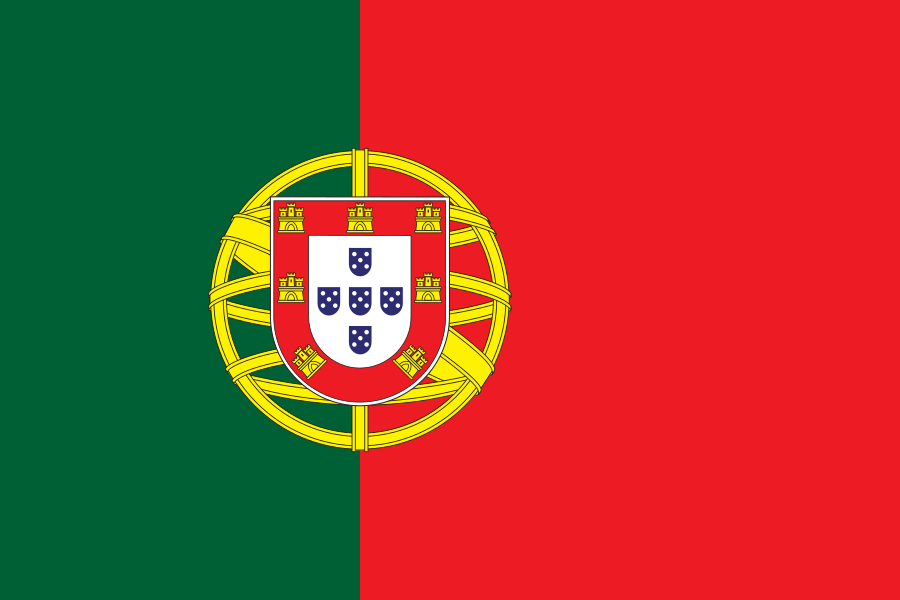
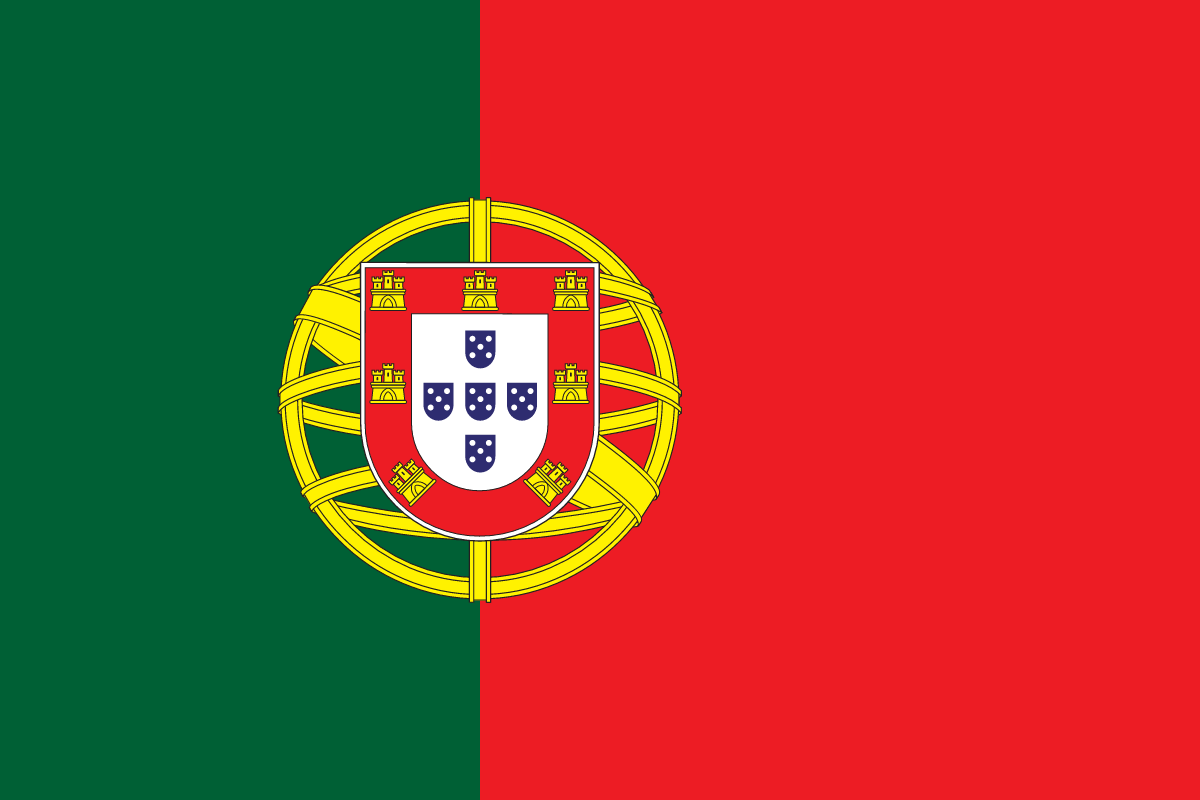
The flag of Portugal is divided vertically into green at the hoist and red at the fly, with the red part larger. Centered on the line between them is the national coat of arms: a yellow armillary sphere with a shield on top, red with seven yellow castles around a white center holding five small blue shields.
Colors
- Red #E81828 · 57%
- Green #086838 · 35%
- Yellow #F8F808 · 3%
Proportions: 2:3
Download: SVG · PNG 1200 px · WebP 640 px
Meaning of the flag of Portugal
Green is commonly linked to hope and red to the blood of those who fought for the nation. The armillary sphere recalls the Portuguese voyages of discovery, and the shield with its castles and five small shields goes back to the early kingdom. The flag was adopted in 1911, after the monarchy was replaced by a republic in 1910.
Map of Portugal
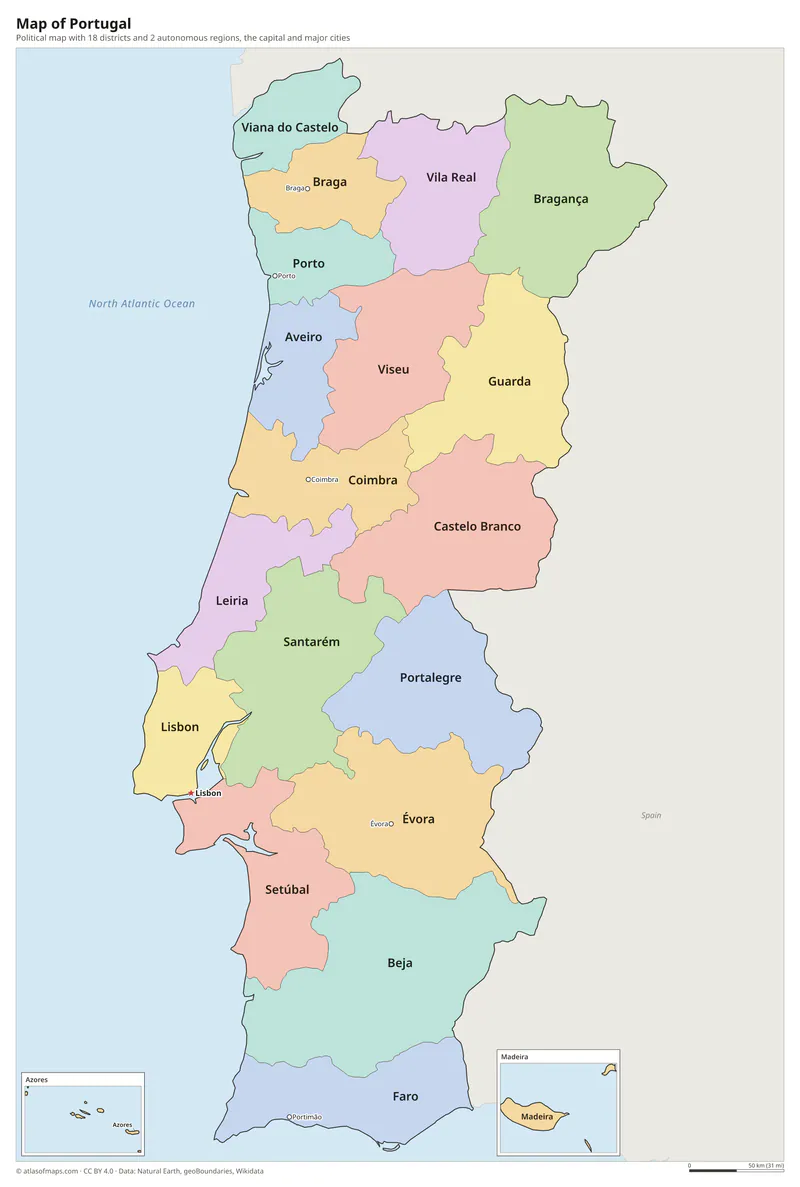
Portugal is a country in southwestern Europe, on the western edge of the Iberian Peninsula. Its only land neighbor is Spain, to the north and east, while the Atlantic Ocean lies to the west and south, along with the Azores and Madeira.
More flags of Europe






Frequently asked questions
What colors are on the flag of Portugal?
The flag of Portugal is red, green, and yellow.
What are the proportions of the flag of Portugal?
The flag of Portugal has a ratio of 2:3 (height to width).
What does the flag of Portugal mean?
Green is commonly linked to hope and red to the blood of those who fought for the nation. The armillary sphere recalls the Portuguese voyages of discovery, and the shield with its castles and five small shields goes back to the early kingdom. The flag was adopted in 1911, after the monarchy was replaced by a republic in 1910.
Can I download the flag of Portugal?
Yes: this page has the flag of Portugal as SVG (vector) and as a 1200-pixel PNG, free to download.
Flag image: Wikimedia Commons, Public domain (Original: Columbano Bordalo Pinheiro Vector: Vítor Luís Rodrigues, António Martins-Tuválkin).
